 by
by Imagine watching a video of a famous person making a shocking statement.
The face looks real.
The voice sounds real.
The expressions look natural.
And the video is convincing enough that you immediately believe it.
But there is one problem.
The person never actually said it.
This is the growing problem of deepfake technology, where artificial intelligence can manipulate or generate video content that looks remarkably authentic.
Now Dubai is developing a new AI system designed specifically to fight this problem.
The Dubai Electronic Security Centre, or DESC, has unveiled SARAAB, an artificial intelligence model designed to detect deepfake videos. The model was announced at GISEC Global 2026 in Dubai and is being developed as an open-source tool that researchers, developers and cybersecurity experts can test and improve. (Wam)
And what makes SARAAB particularly interesting is that it is designed to analyze an entire video, rather than simply checking one image or one frame.
What Is SARAAB?
SARAAB is an AI-powered deepfake detection model developed by an Emirati team at Dubai’s Electronic Security Centre.
According to DESC, it is the first model of its kind developed by a government entity in the Arab region. The centre says the model was created to respond to the growing threat posed by AI-generated and manipulated video content. (Wam)
The basic idea is simple.
AI can now be used to create fake videos.
So another AI system can be used to look for the digital fingerprints left behind by that manipulation.
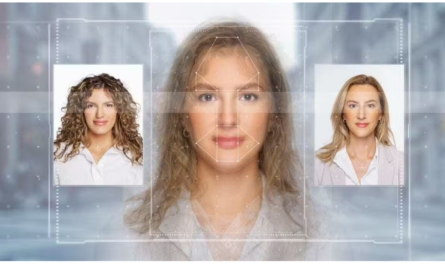
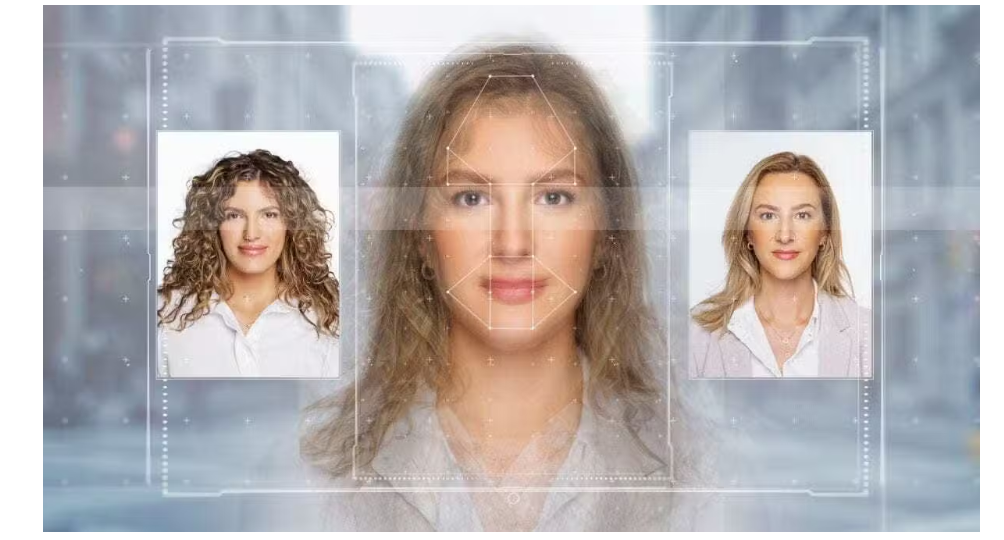
SARAAB analyzes facial features and uses a heat-map approach to identify areas that may contain synthetic or manipulated elements.
Instead of simply saying:
“This video is fake.”
The system is designed to help identify where the manipulation may have occurred.
That could make the technology more useful for investigators, cybersecurity teams, media organizations and researchers.
Why Deepfakes Are Becoming a Serious Problem
Deepfakes are not a completely new technology.
But generative AI has made the creation of convincing synthetic media much easier.
A manipulated video can potentially be used to make someone appear to say something they never said.
That creates problems far beyond social media entertainment.
Dubai Launches AI Model to Detect Deepfake Videos
Imagine a fake video of a company CEO announcing a major decision.
Or a fake government official making an emergency announcement.
Or a fake celebrity promoting a financial product.
Or a fake person appearing in a video call.
The danger isn’t simply that people can create fake content.
The bigger problem is that people may believe it.
Once realistic synthetic video becomes difficult to distinguish from authentic footage, trust itself becomes a cybersecurity issue.
This is the environment in which SARAAB is being introduced.
How Does SARAAB Detect a Deepfake?
One of the key features described by DESC is SARAAB’s use of a heat map.
The system examines facial features and looks for signs of synthetic manipulation.
The resulting visualization can highlight areas where the model detects potential manipulation.
Think of it like an AI investigator pointing at a person’s face and saying:
“Look here. Something about this part of the video may have been artificially generated or altered.”
This approach can be particularly useful because deepfakes do not necessarily manipulate an entire video.
Sometimes only a small section may be changed.
A person could appear normally for most of a video and then have their face manipulated for a few seconds.
That’s where SARAAB’s full-video analysis becomes important.
Dubai Launches AI Model to Detect Deepfake Videos
It Doesn’t Just Check One Frame
According to DESC representatives quoted by Khaleej Times, SARAAB can analyze an entire video.
For example, imagine a two-minute video.
The first 90 seconds could be completely authentic.
Only the final 30 seconds might contain a deepfake.
The system is designed to analyze the whole two minutes rather than stopping after finding apparently normal footage. (Khaleej Times)
This matters because checking only selected frames could potentially miss manipulation that appears later.
A full-video approach gives the detection system a broader view of what is happening throughout the footage.
That doesn’t mean every deepfake will automatically be detected.
But it shows that SARAAB is being designed around a more comprehensive analysis process.
Dubai Says SARAAB Has 91% Accuracy
One of the biggest claims surrounding the new system is its reported accuracy.
DESC has said that SARAAB has an accuracy rate of 91 percent, which the centre described as among the highest in the world. (Khaleej Times)
However, this number should be understood carefully.
An accuracy percentage by itself doesn’t tell us everything about a detection model.
To properly evaluate a system like this, researchers would want to know details such as:
What dataset was used?
How many real videos were tested?
How many manipulated videos were tested?
What types of deepfakes were included?
How does the model perform against new manipulation techniques?
And how does it compare with other detection systems under the same conditions?
The current public reporting does not provide enough information to independently verify the 91% figure across all these conditions.
So for now, 91% should be treated as DESC’s reported performance claim, rather than as a universally established benchmark.
That distinction is important because deepfake technology itself is constantly changing.
Why Open Source Could Be Important
Perhaps one of the most interesting decisions by Dubai is that SARAAB is planned as an open-source AI model.
DESC says the model will be made available through developer platforms so AI engineers, cybersecurity professionals and researchers can test it, build on it and contribute to its development. (Wam)
Khaleej Times reported that SARAAB is planned for deployment on Hugging Face, a major platform used by the AI development community to share and work with machine-learning models. (Khaleej Times)
Why does this matter?
Because deepfake detection is essentially an arms race.
One group develops better methods for generating synthetic video.
Another group develops better methods for detecting it.
Then the generation technology improves again.
And the cycle continues.
An open-source approach could allow more researchers and developers to examine the model, test it against new types of synthetic media and potentially improve its capabilities.
Instead of one organization trying to fight deepfakes alone, the technology can potentially become part of a larger research ecosystem.
The Government Connection Makes It Different
SARAAB isn’t simply another startup application.
It was developed by a government cybersecurity entity.
DESC says the model was developed entirely by an Emirati team.
That gives the project a broader significance for Dubai’s cybersecurity strategy. (Wam)
The launch also happened alongside two other cybersecurity initiatives at GISEC Global 2026.
These include the Dubai Cyber Skills Framework, which provides a common reference for cybersecurity qualifications, certifications and career development.
DESC also introduced an ISR Auditor Certification Programme designed to help information-security professionals assess compliance with Dubai’s Information Security Regulation. (Khaleej Times)
So SARAAB isn’t being presented as an isolated experiment.
It is part of a wider push to develop cybersecurity capabilities and expertise in Dubai.
Deepfakes Are Becoming a Digital Trust Problem
The deeper issue behind SARAAB is not just fake videos.
It is the question of whether people can trust what they see online.
For decades, video has generally been treated as strong evidence.
If someone recorded an event on camera, people could watch the footage and make their own judgment.
Generative AI has weakened that assumption.
Today, seeing something on video does not automatically mean that it happened exactly as shown.
A person’s face can be manipulated.
Their voice can be recreated.
Their expressions can be generated.
Entire scenes can potentially be produced synthetically.
That means society needs new ways to verify digital evidence.
Deepfake detection systems such as SARAAB are one possible part of that solution.
Deepfake Detection Is Not a Magic Button
There is an important limitation, however.
A deepfake detector should not be treated as an absolute truth machine.
AI-generated media continues to evolve.
A detection system trained on one generation of deepfake technology may face new challenges when completely different generation techniques appear.
There can also be false positives and false negatives.
A detector might incorrectly flag authentic content.
Or it might fail to detect a sophisticated manipulation.
That’s why serious investigations would likely need more than one signal.
Metadata, source verification, digital signatures, provenance systems, forensic analysis and independent confirmation can all play a role.
SARAAB can potentially become one layer of that process.
But one AI score should not automatically determine whether an important video is real or fake.
Who Could Use SARAAB?
If successfully deployed, a deepfake detection model could have applications across multiple sectors.
Government
Government agencies could potentially use detection systems to examine suspicious videos involving public officials, emergency announcements or other sensitive information.
Cybersecurity
Security teams could use the technology when investigating impersonation attempts and synthetic media.
Media Organizations
News organizations increasingly need to verify user-generated videos and social-media footage before publishing it.
A detection model could become another tool in that verification process.
Researchers
Because SARAAB is planned as an open-source model, researchers could experiment with it, benchmark it and potentially modify it for specialized applications.
Businesses
Companies could potentially use deepfake detection to protect executives and employees from impersonation scams.
This is becoming increasingly relevant as synthetic media becomes more convincing.
Why the Timing Matters
SARAAB arrives at a moment when AI-generated media is becoming increasingly sophisticated.
Just a few years ago, many deepfakes were relatively easy to identify.
Faces could look unnatural.
Lip movements might not match speech.
Expressions could appear strange.
But generative AI has improved rapidly.
Today, the challenge is no longer simply creating fake content.
The challenge is creating fake content that looks authentic enough to fool another human being.
That changes the cybersecurity equation.
Attackers don’t necessarily need to hack a computer if they can simply convince a person to believe something that isn’t true.
A fake video can become a social-engineering tool.
And that is why deepfake detection is increasingly becoming part of the cybersecurity conversation.
Dubai’s Larger AI Strategy
SARAAB also fits into a much broader UAE push toward artificial intelligence.
In April 2026, the UAE government announced a framework targeting the deployment of agentic AI across 50% of government sectors, services and operations within two years. The initiative focuses on AI systems capable of monitoring situations, analyzing information and carrying out sequences of actions. (PDD Portal)
In June, Dubai also approved the establishment of an Artificial Intelligence and Data Authority, intended to consolidate public data, AI and digital-government capabilities into a unified ecosystem. (Protocol Dubai)
Against that background, SARAAB can be viewed as another example of Dubai developing specialized AI capabilities for government and cybersecurity use.
What Happens Next?
DESC says SARAAB is expected to launch by the end of 2026.
The model is planned to become available through developer platforms, giving researchers and technical users an opportunity to test and potentially improve the technology. (Khaleej Times)
The real test will come after wider deployment.
Can SARAAB maintain its reported performance against new deepfake techniques?
Can developers improve it through open-source collaboration?
Can it identify partial manipulations reliably?
And can organizations use its results without creating a false sense of certainty?
Those questions will determine how valuable the technology ultimately becomes.
The Bigger Battle: AI vs AI
There is something almost ironic about the future of synthetic media.
Artificial intelligence is helping people create increasingly realistic fake videos.
And now artificial intelligence is being developed to detect those same fakes.
AI is fighting AI.
The technology that creates the deception and the technology that detects it are likely to keep evolving together.
Today, SARAAB is one new entry in that battle.
Tomorrow, deepfake detection may become as normal as antivirus software.
Before sharing a video, a phone could automatically tell you whether the footage has signs of manipulation.
Before a news organization publishes a clip, an AI system could analyze its authenticity.
Before a company executive appears in a video call, security software could verify that the person on the screen is actually who they claim to be.
That future is no longer purely theoretical.
Dubai’s SARAAB shows that governments are beginning to treat synthetic media as a serious cybersecurity challenge.
And perhaps the most important lesson is this:
In the age of AI-generated video, seeing may no longer be believing.
The next generation of digital security may depend on something much more powerful than our eyes—
the ability to prove that what we’re seeing is real.